


There is a specific kind of dissatisfaction that many high functioning professionals struggle to explain, partly because nothing looks obviously wrong from the outside.
The career is stable.
The salary is good.
The position may even be respected.
Life functions well enough. And yet there is often a quiet feeling that something no longer fits.
Many people already know, at least privately, what they would rather move toward. It may be entrepreneurship, more meaningful work, a calmer lifestyle, greater freedom, or simply work that feels emotionally healthier.
But the alternative path usually involves uncertainty, lower income, temporary instability, or the uncomfortable reality of becoming a beginner again after years of building competence and security. Staying therefore starts to feel like the responsible decision, even when it quietly drains energy and motivation over time.
This is what I mean by the golden cage. Not a terrible life. Not failure. A situation where security gradually begins to guide decisions more strongly than meaning or genuine personal alignment.
The difficult part is that capable and intelligent people are often very good at rationalising why they should stay.
They focus on practical arguments because the practical arguments are real. Responsibilities matter. Financial stability matters. Predictability matters. But when a person spends too many years ignoring the quieter internal signals underneath those practical considerations, they often begin losing clarity about what they actually want from life anymore.
The golden cage is not always built from ambition or ego. Sometimes it is built from responsibility, caution, and years of trying to make sensible decisions. That is why so many intelligent people end up there without fully noticing it happening.
When Practical Thinking Starts Working Against You
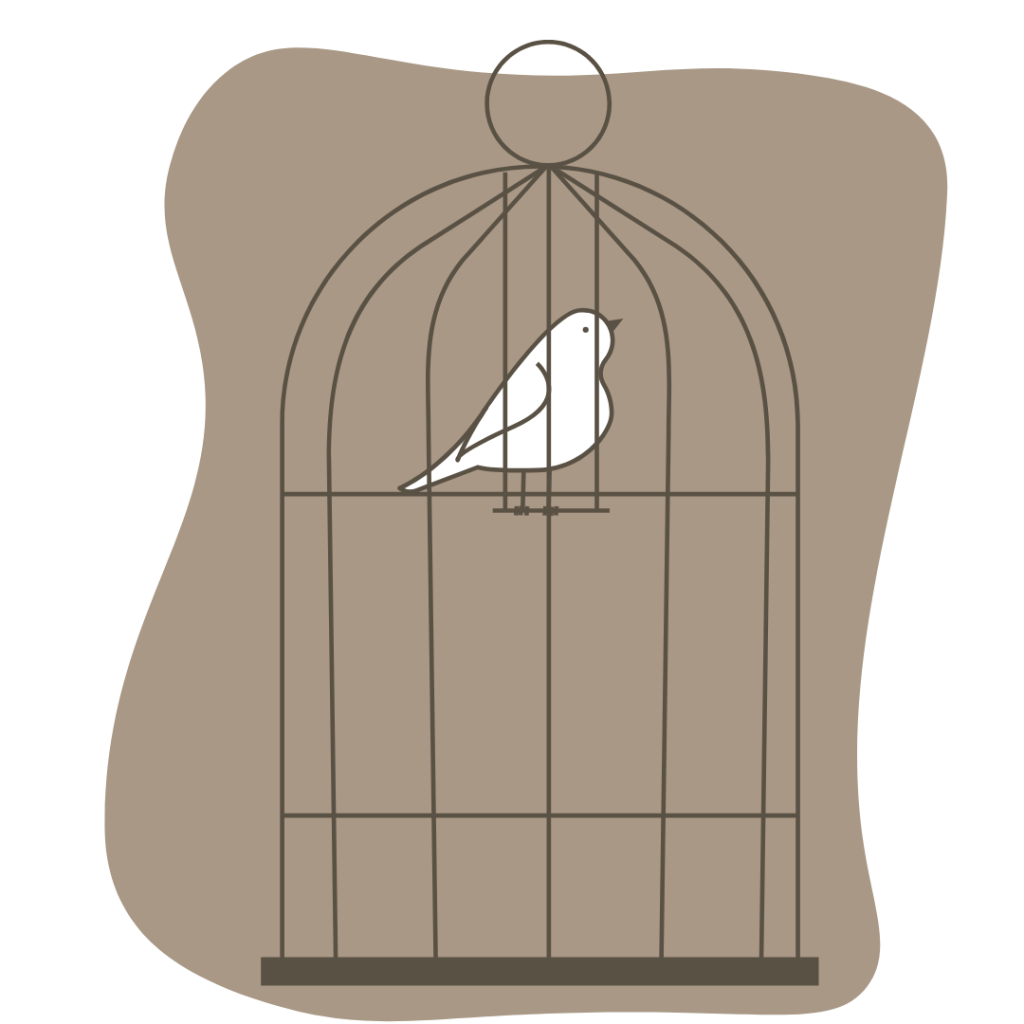
What makes the golden cage particularly difficult for intelligent and capable people is that they are usually very good at explaining to themselves why staying is the rational choice.
These are people who are used to solving problems, handling pressure, thinking strategically, and making responsible decisions.
They are not impulsive. They are often the person others rely on when situations become uncertain or complex. Those qualities are valuable, and in many areas of life they lead to success.
But they also make it easier to remain too long in situations that no longer feel internally right.
The moment a person begins seriously considering a different direction, the mind immediately starts analysing the practical consequences. It calculates the financial risk. It focuses on responsibilities, timing, stability, and uncertainty. It reminds the person how much has already been built and how difficult it would be to start again at this stage of life.
And to be fair, these concerns are not imaginary.
Changing direction at 25 and changing direction at 45 are psychologically and financially very different experiences. A person may have children, a mortgage, professional credibility, or a lifestyle that depends on predictable income. The risk is real, which is exactly why so many intelligent people stay where they are far longer than they expected.
What often happens, however, is something more subtle.
The mind becomes so focused on the question:
“Is this safe?”
that it quietly stops asking:
“Is this still the right life for me?”
Those are not the same question.
And over time, when safety becomes the primary filter for every major decision, people can slowly lose connection to their own deeper motivations, interests, and sense of direction.
That’s the cage. And naming it is, actually, the first useful step.
Why Staying Always Wins the Calculation
Part of the golden cage can be explained through basic human psychology.
People do not evaluate gains and losses objectively. Research by psychologists Daniel Kahneman and Amos Tversky showed that human beings tend to experience losses much more intensely than equivalent gains. In practice, losing security, income, stability, or status usually feels psychologically far more powerful than the possible excitement of gaining freedom, meaning, or a different kind of life. This is one reason major life changes can feel emotionally difficult even when a person knows their current situation no longer feels fully right.
This has a powerful effect on career decisions.
When a person considers leaving a stable but emotionally misaligned situation, the mind does not calculate the situation neutrally. It immediately focuses on what could be lost. The predictable salary. The professional credibility. The routines. The certainty of knowing how life currently works.
The possible benefits of change often feel abstract and uncertain by comparison.
This is one reason intelligent and rational people can remain stuck for years even when they already know something is not right. Their thinking is not necessarily irrational. In many ways, the brain is doing exactly what it was designed to do. It is trying to protect stability and minimise risk.
The important thing to understand, however, is that staying is not automatically the result of completely objective thinking either.
Very often it is also influenced by a nervous system that naturally prioritises familiarity and safety over uncertainty, even when the familiar situation is slowly draining energy, motivation, or meaning over time.
What the Golden Cage Actually Costs
The most obvious cost of the golden cage is usually the life a person never fully explores. The business never started. The career change postponed for “later.” The more meaningful or more personally aligned version of life that remains permanently theoretical.
But the deeper psychological cost is often less visible.
At first, the desire for something different usually feels clear and emotionally alive. A person may feel drawn toward entrepreneurship, creative work, greater freedom, slower living, or work that feels more meaningful and emotionally sustainable. The interest feels real.
What often changes over time is not the desire itself, but the way the mind starts interpreting it.
After years of postponing change, the brain gradually begins treating those desires less like valid internal signals and more like unrealistic ideas. The thought process slowly shifts from:
“This is something I genuinely want.”
to:
“This is probably not realistic for someone like me.”
This rarely happens through one dramatic decision. More often it develops gradually through repetition and practicality. A person keeps explaining why now is not the right time. Responsibilities increase. Financial risk feels larger. Stability becomes harder to walk away from. And little by little, the person stops engaging seriously with the part of themselves that wanted something different in the first place.
Psychologically, this matters more than many people realise.
Research in psychology has shown that people adapt surprisingly well even to situations that do not fully satisfy them.
Human beings are capable of normalising almost anything if it continues long enough. This ability helps people survive difficult situations, but it can also make slow dissatisfaction harder to recognise clearly because what once felt emotionally important gradually becomes background noise.
Over time, many people reach a point where the original desire itself becomes difficult to access. The dissatisfaction remains, but the clarity disappears. They know something feels missing, yet they are no longer fully sure what they actually want anymore.
That is often the real cost of the golden cage.
The More Important Question
Most people trapped in a golden cage spend years asking themselves the same question:
“Should I stay or should I leave?”
They analyse it repeatedly from every possible angle.
They calculate the financial consequences, think about responsibilities, compare risks, and often end up concluding that staying is the sensible and mature decision.
Which, in many cases, it may be.
But focusing only on that question can hide something more important underneath it.
The deeper issue is often not whether a person should leave immediately. It is whether they still have a clear connection to what they actually want from their own life anymore.
This is where the golden cage becomes psychologically complicated.
When people spend enough years prioritising safety, responsibility, predictability, and external expectations, they can gradually lose touch with their own internal direction. Not suddenly, but slowly enough that it feels normal. Life becomes organised around functioning, managing responsibilities, and maintaining stability. The deeper questions get postponed because there is always something more practical that needs attention first.
Over time, many people notice something subtle happening. They become less connected to curiosity, excitement, creativity, or even clear desire itself. The inner voice does not disappear completely, but it becomes quieter underneath routines, obligations, and constant mental load.
And because highly capable people are usually very good at functioning under pressure, this loss of connection can continue for years without looking like a crisis from the outside.
This matters because a life guided entirely by safety and practicality often creates a very specific kind of dissatisfaction. Not dramatic unhappiness, but a quieter feeling that life is being managed rather than genuinely lived.
That feeling is easy to ignore for a while.
But much harder to ignore over decades.
Where Clarity Usually Begins

If any of this feels familiar, the first step is usually not making a dramatic life decision. It is something quieter and, in many ways, more difficult.
It is learning to notice the difference between what feels practical and what feels true.
Most people in a golden cage become extremely skilled at listening to the rational part of the mind. The part that focuses on security, responsibility, timing, and risk. That voice is important. It protects stability and helps people make sensible decisions.
But many people gradually stop listening to another part of themselves altogether. The quieter part that notices exhaustion, lack of meaning, loss of excitement, or the feeling that life no longer fully fits. Not because those feelings are irrational, but because they are often harder to explain logically.
Over time, practical thinking can become so dominant that people begin treating every deeper desire as something that must first justify itself financially or rationally before it is allowed to matter.
This is often where people lose connection to themselves without fully noticing it happening.
Clarity usually does not begin with suddenly knowing exactly what to do next. It begins much earlier than that. It begins when a person becomes willing to take their own internal experience seriously again instead of immediately explaining it away.
You can build a stable, responsible, externally successful life and still honestly ask whether it truly feels right for you anymore.
That is not immaturity, failure, or irresponsibility.
It is a very human question that many people postpone asking for far too long.
A Simple Exercise for Getting Clearer
If this article felt familiar, there is a simple exercise worth trying. Not to force yourself into a decision or suddenly figure out your future, but simply to hear yourself more clearly than you currently do.
Many people in a golden cage are not experiencing one clear internal state. They are usually experiencing two different directions at the same time, and over time those signals become mixed together into a general feeling of stress, restlessness, or dissatisfaction that is difficult to properly examine.
One part of the mind focuses on protection and stability. It thinks about financial security, responsibility, predictability, timing, and everything that could go wrong if life changes too much. This part is not irrational or negative. In many ways, it is the reason your life functions as well as it does. It has helped you build stability, survive pressure, and make responsible decisions.
The problem is simply that this voice often becomes so dominant that the quieter signals underneath it stop receiving attention.
The other side is usually less logical and more difficult to explain clearly. It may appear as emotional flatness, loss of motivation, curiosity toward a different kind of life, chronic tiredness, or a persistent feeling that something important is missing even when life looks successful from the outside.
This side is not necessarily asking you to destroy your current life or make reckless decisions. Often it is simply trying to tell you that something no longer feels fully aligned.
The exercise itself is very simple.
Sit somewhere quiet for a few minutes without distractions. Place one hand slightly to your left side and let it represent the part of you that wants safety, predictability, and stability. Then place your other hand slightly to your right side and let it represent the quieter part that carries the dissatisfaction, curiosity, exhaustion, or desire for something more meaningful.
You do not need to visualise anything vividly for this exercise to work. Simply notice what happens when you focus on each side separately. You may notice thoughts, emotions, physical sensations, tension in the body, or simply a different emotional atmosphere connected to each side.
1
First ask the protective side:
What are you trying to protect?
Then simply listen.
Very often the answer is deeper than money alone. People may notice fear about losing identity, status, competence, approval, or the stability they worked many years to build.
2
Then ask the quieter side:
What feels missing?
Do not force an answer. Sometimes the response is surprisingly simple. Freedom. Meaning. Rest. Creativity. A feeling of being emotionally present in your own life again.
3
Finally, ask yourself one more question:
If neither side is completely wrong, what would a more honest balance look like?
Do not rush to solve the question immediately.
The value of this exercise is not forcing clarity through analysis. It is creating enough psychological space to hear parts of yourself that may have been ignored for a very long time.
If you’re sitting with any of this and want to think it through properly — understanding the patterns keeping you stuck and building a clearer picture of what a fulfilling next chapter actually looks like — this is exactly the work we do at Your Mind Shaper.